Penulisd: Rizky Ariftama Manullang (2452001)
Rempang Island, located in Batam City, has become a trending topic of discussion, triggered by pros and cons regarding the development of Rempang Eco City (REC). The Rempang case has sparked serious debate involving a variety of perspectives because it has been highlighted by almost all mass media in Indonesia (Antara, 2023; BBC Indonesia, 2023; Kompas.com, 2023). The Rempang case has also been discussed by international media such as Al Jazeera (Aljazeera, 2023).

Sumber: ChatGPT
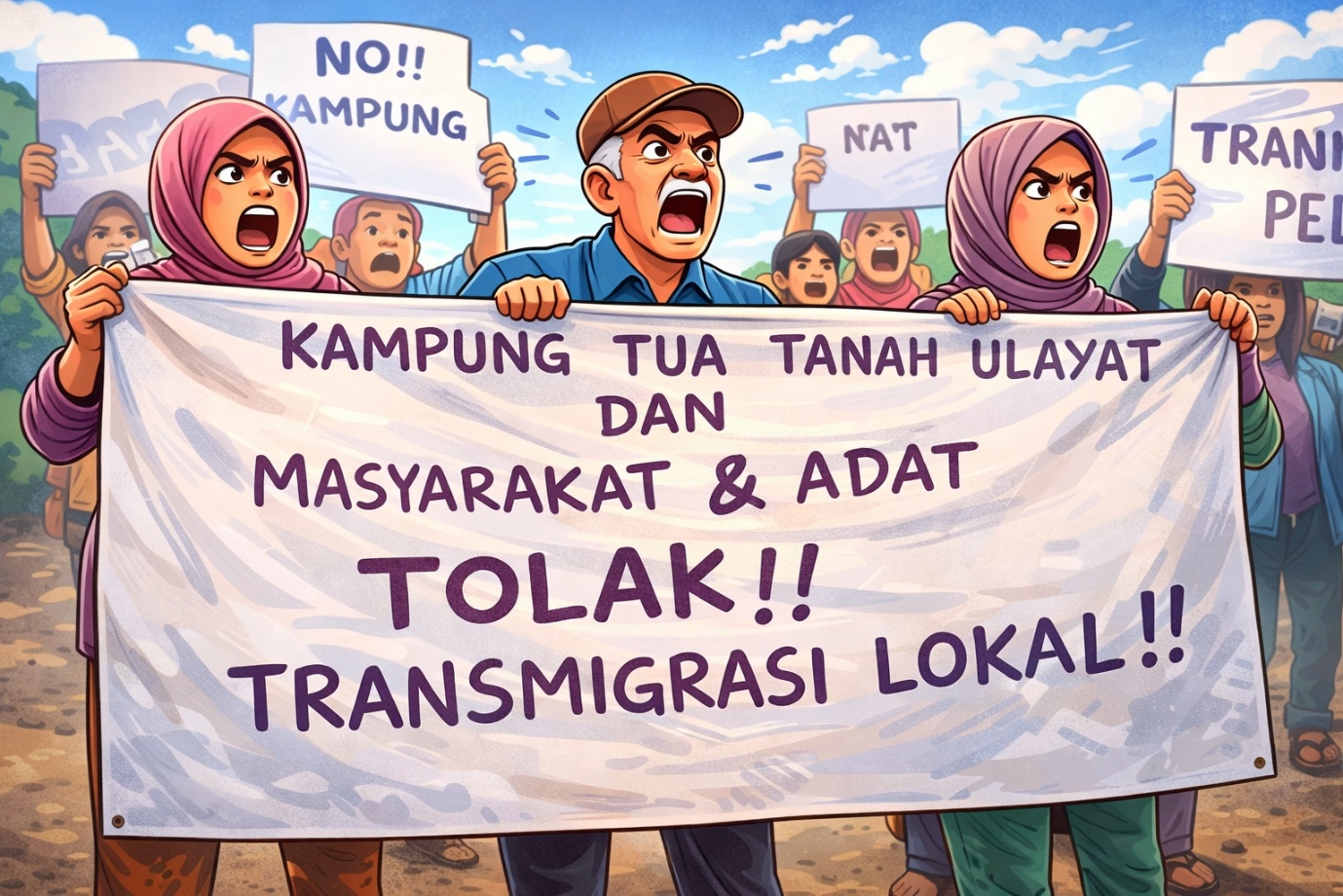
The issues in Rempang have given rise to various claims regarding the status of the land and the identity of the people living in the area. Some residents refer to the land they occupy as ancestral land, with some even claiming that it is a customary communal land (tanah ulayat). These people remain on their land in Rempang and refuse to be relocated to Tanjung Banon, Galang District. On the other hand, there are also residents who are willing to be relocated voluntarily. This difference in attitude shows confusion in the use of terms, especially regarding what is meant by indigenous peoples (masyarakat adat), customary law communities (masyarakat hukum adat), customary communal land (tanah ulayat), and old villages (kampung tua) (Arianto, 2023). Under the Indonesian legal system, these terms cannot be interchanged because they have different legal consequences. Misunderstanding these differences can result in errors in determining the legal status of an area.
In legal literature, not all indigenous peoples are customary law communities. All customary law communities are part of indigenous peoples, but not all indigenous peoples qualify as customary law communities (Ratuanak, 2019). Indigenous peoples are essentially communities that have a certain genealogical and/or territorial unity, a clearly defined territory, a traditional social structure, and norms that govern communal life.
However, to be referred to as a customary law community, there must be additional elements. These elements are the existence of customary laws that are still alive and obeyed, as well as the existence of institutions or mechanisms that enforce these customary laws. In other words, customary law communities are legal subjects that have their own legal systems, complete with rules, authorities, and enforcement mechanisms.
The existence of customary law communities leads to the emergence of customary rights. Customary rights are communal rights to land that are attached to customary law communities as a whole. Customary land cannot be sold individually because ownership is collective. Individuals only obtain usage rights based on their membership in the customary law community. A clear example can be found in the Nagari System in West Sumatra, where customary land is managed according to a structure that remains in place and includes a system for enforcing customary law.
Thus, customary rights cannot exist independently. They can only exist if there is a customary law community that fulfils these elements. Without the existence of customary law that is still in force and without the mechanisms to enforce it, a community cannot be categorised as a customary law community, and therefore cannot give rise to customary rights.
Unlike the concept of customary land, the old villages in Batam were born out of historical factors. Old villages are old settlements that existed before Batam developed into an industrial and commercial area. Recognition of old villages is given as a form of respect for the communities that have long settled in the area. This recognition is outlined in the Batam Mayor’s Decree Number KPTS.105/HK/III/2004 concerning the Determination of Old Village Areas in the City of Batam.
Sumber: ChatGPT
The status of an old village is not a communal right like customary land. Land and houses in old villages can be owned individually and can be transferred in accordance with national land law provisions. Residents have rights to their buildings and land through a certification mechanism. However, they cannot change the status of the area as an old village because this status is a form of administrative recognition and respect from the government for areas of historical value. This means that the rights attached to residents are individual, not communal.
In Batam City, including Rempang, all land management is governed by Land Management Rights (Hak Pengelolaan Lahan) administered by the Batam Indonesia Free Zone Authority (Badan Pengusahaan Batam/BP Batam) as an extension of the state. The land system in force is the national legal system, not the communal customary law system. To date, there is no customary law community structure in Batam that has customary laws that are still formally enforced and has the means to enforce them. Nor is there a communal land tenure system in the form of customary rights as known in customary law communities in other regions.
The Rempang community can be referred to as an indigenous community in the sense that it is a local community with historical ties to the area. They are the original inhabitants in the context of the history of settlement. However, they are not an indigenous legal community as defined in the national agrarian law. There is no communal customary rights system managed by an indigenous institution with recognised legal authority.
The Rempang community can be referred to as an indigenous community in the sense that it is a local community with historical ties to the area. They are the original inhabitants in the context of the history of settlement. However, they are not a customary law community as defined in the national agrarian law. There is no communal customary rights system managed by a customary institution with recognised legal authority.
Therefore, the designation of land in Rempang as customary land does not meet the requirements of Indonesian agrarian law. Customary rights can only exist if there is a customary law community that has living customary laws and the means to enforce them. In Batam, these conditions are not met.
The distinction between indigenous peoples and customary law communities, as well as between old villages and customary lands, is important so that public discourse is not built on misused terminology. Old villages are historically recognised sites that grant individual rights to residents. Customary communal lands are communal rights that arise from the customary law system that is still in force. The two are conceptually and legally distinct.
Thus, it can be asserted that in Batam there is no customary communal land (tanah ulayat) or customary law rights (hak ulayat) because there is no customary law community (masyarakat hukum adat) as required by the Indonesian legal system. What exists are indigenous peoples (masyarakat adat) in the sense of historical communities and old villages (kampung tua) as a form of administrative recognition and respect from the government.
Editor: Ambarwulan, S.T.
References
Aljazeera. (2023, September 15). Protests in Indonesia as thousands face eviction for Rempang ‘Eco-City.’ https://www.aljazeera.com/news/2023/9/15/protests-in-indonesia-as-thousands-face-eviction-for-rempang-eco
Antara. (2023, Oktober 23). Polda Kepri klarifikasi video viral polisi bawa parang di Pulau Rempang saat ukur lahan. Antara News Lampung. https://lampung.antaranews.com/berita/702858/polda-kepri-klarifikasi-video-viral-polisi-bawa-parang-di-pulau-rempang-saat-ukur-lahan
Arianto, T. (2023, September 14). Memahami Kasus Pulau Rempang. Kompas. https://www.kompas.id/artikel/memahami-kasus-pulau-rempang?utm
BBC Indonesia. (2023, September 7). Rempang Eco City: Bentrokan, gas air mata, dan siswa dilarikan ke rumah sakit – empat hal yang perlu Anda ketahui. BBC News Indonesia. https://www.bbc.com/indonesia/articles/c4n85vgremqo
Keputusan Wali Kota Batam Nomor KPTS.105/HK/III/2004 tentang Penetapan Wilayah Perkampungan Tua di Kota Batam.
Kompas.com, K. C. (2023, September 19). Sederet Pelanggaran HAM di Pulau Rempang, Kekuatan Aparat Berlebih hingga Tembakkan Gas Air Mata Halaman all. KOMPAS.com. https://regional.kompas.com/read/2023/09/19/163000878/sederet-pelanggaran-ham-di-pulau-rempang-kekuatan-aparat-berlebih-hingga
Ratuanak, A. (2019). Tidak Semua Masyarakat Adat adalah Masyarakat Hukum Adat, Ambigu dalam Peristilahan. Kompasiana. https://www.kompasiana.com/andreratuanak/5d5319d90d82303d914e7732/tidak-semua-masyarakat-adat-adalah-masyarakat-hukum-adat-ambigu-dalam-peristilahan?page=all