Author: Duke Paopathon Pardede (2461001) | Editor: Ambarwulan, S.T.
(Source: International Relation Office)
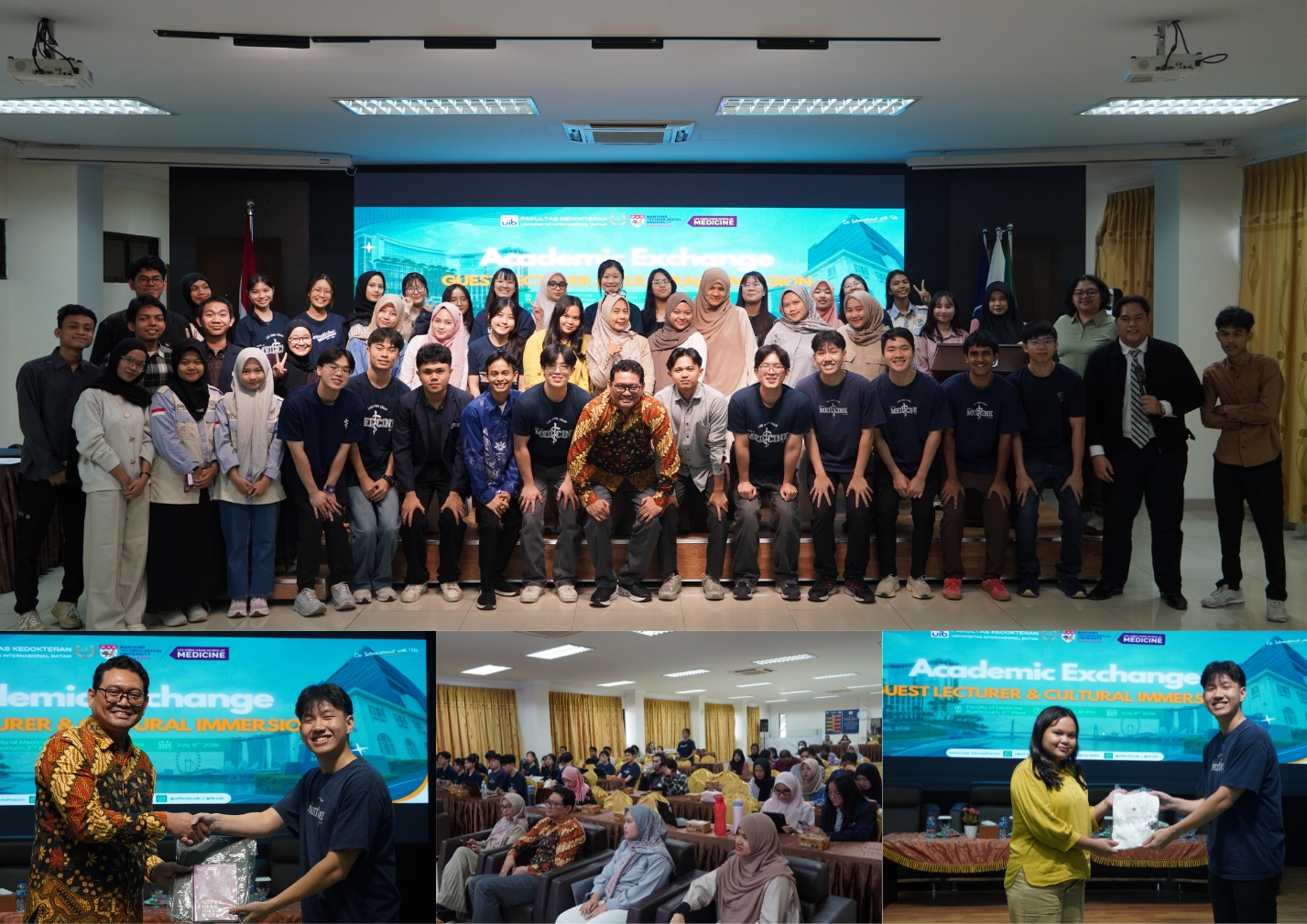
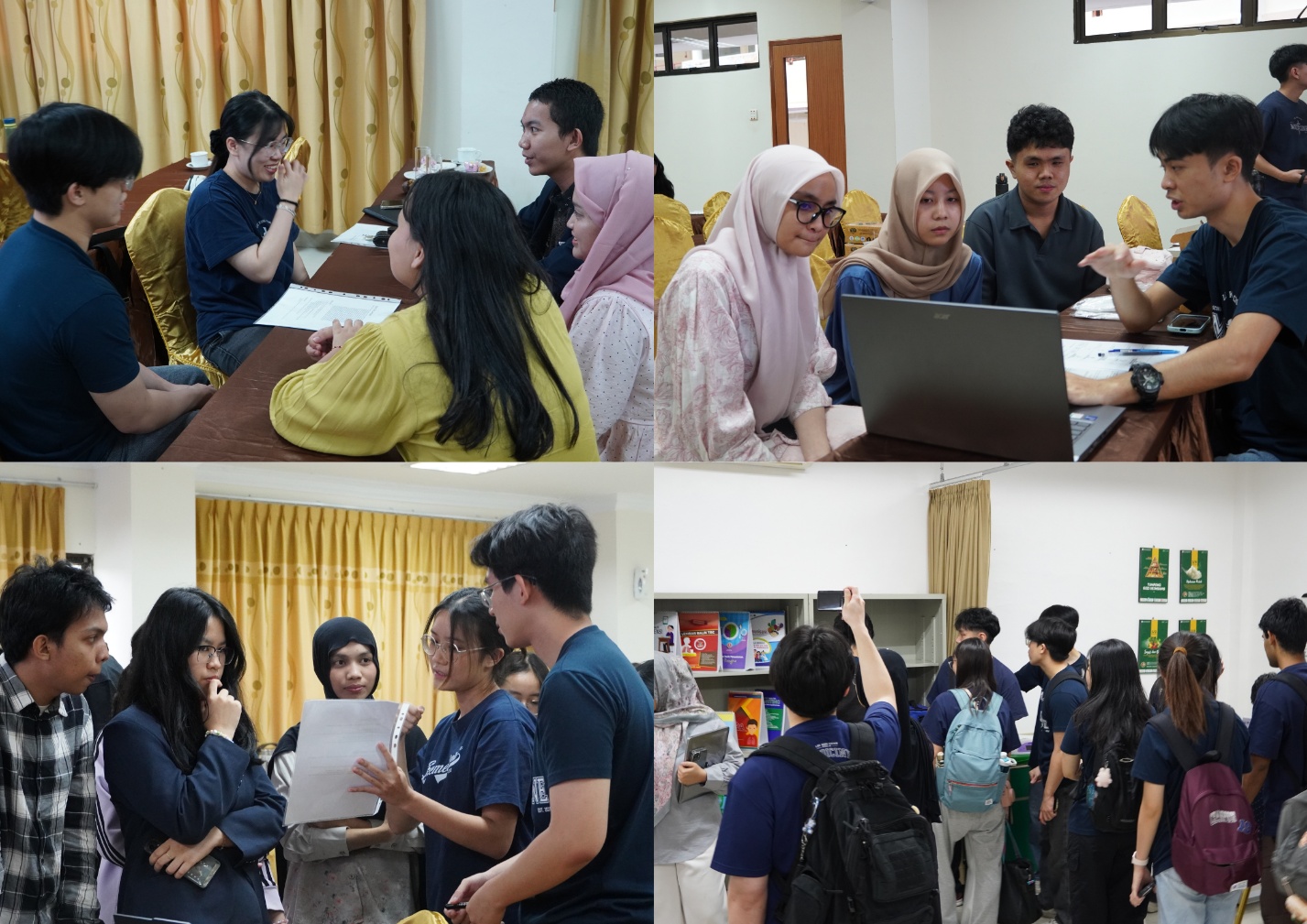
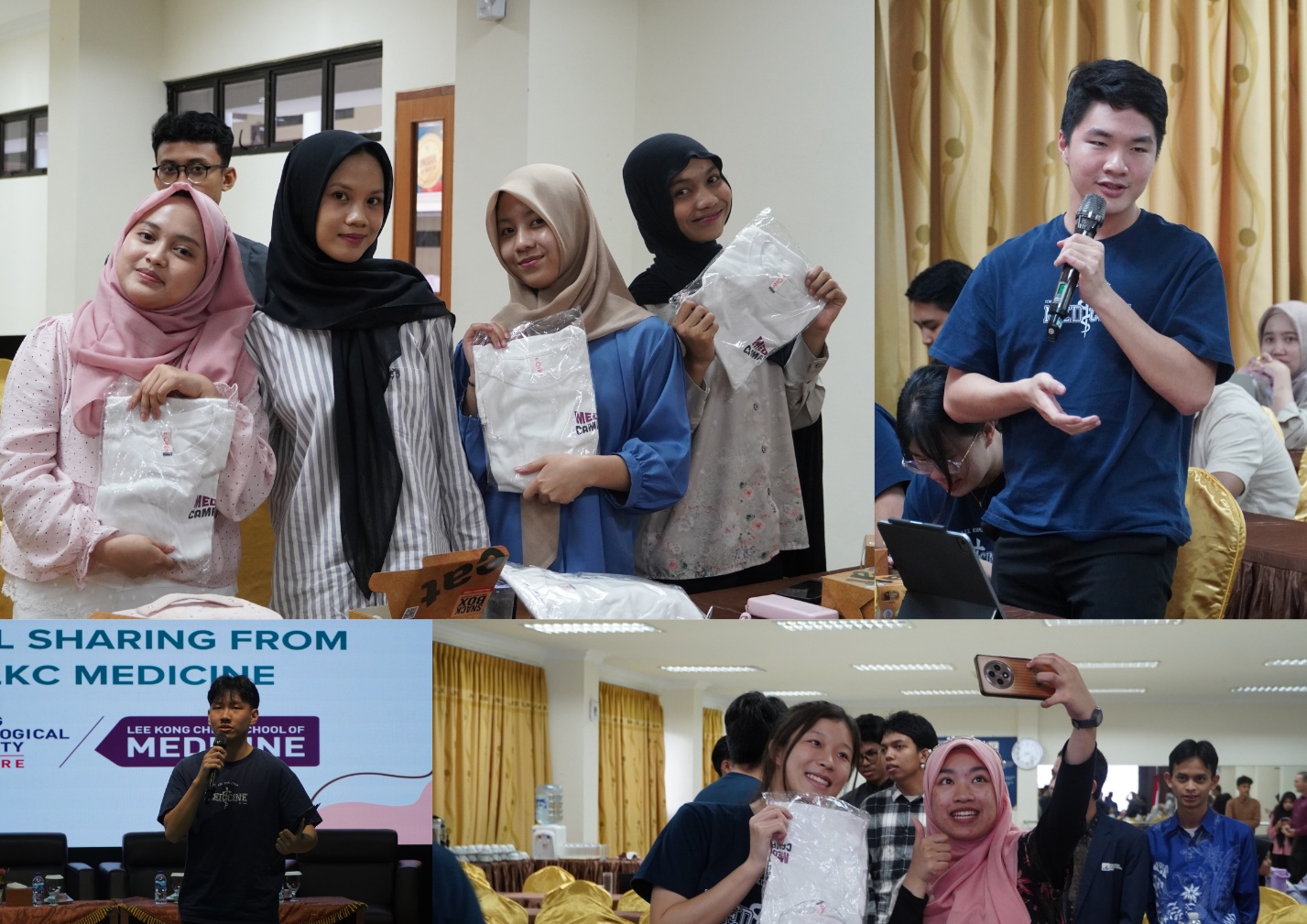
Universitas Internasional Batam (UIB) welcomed a delegation from the Lee Kong Chian School of Medicine (LKCMedicine), Nanyang Technological University (NTU) Singapore, for a day of academic exchange and cultural immersion held on 8 July 2026 at Aula Gedung B, UIB’s Batam campus. Organised jointly by UIB’s Faculty of Medicine and its International Relations Office (Kantor Urusan Internasional), the gathering brought together students and lecturers from both institutions for a guest lecture, cultural presentations, and a tour of the UIB campus. The event marked the opening chapter of a five-day programme that continued the following week with a community health screening initiative in two villages on the outskirts of Batam, extending the partnership beyond the lecture hall and into direct engagement with local residents.
(Source: International Relation Office)
The collaboration builds on UIB’s broader strategy of internationalising its medical education through partnerships with institutions abroad, an effort the university considers essential to strengthening teaching quality, research capacity, and community outreach. For LKCMedicine, the visit forms part of Project Daya, a long-running Overseas Community Involvement Project run by its students that has brought health education and screening services to Batam three times a year, in March, July, and October, for more than a decade. The two institutions had already begun building rapport earlier in the year, when a UIB delegation visited NTU in March 2026, laying the groundwork for the July exchange and the joint activities that followed it in Batam’s kampung communities.
(Source: International Relation Office)
The Project Daya delegation that arrived in Batam comprised seventeen members from LKCMedicine, including fifteen medical students and two accompanying lecturers, who were welcomed alongside nineteen medical students and six lecturers from UIB’s Faculty of Medicine. Three staff members from UIB’s International Relations Office also took part in coordinating the programme. In total, forty-five participants from both universities gathered for the exchange, reflecting the scale of commitment each institution placed on the visit. The delegation’s arrival followed months of preparation between UIB’s organising committee and Project Daya, whose members work in partnership with the local organisation Peduli Bangsa, which has supported the group’s operations and translation needs throughout its years of engagement in Batam.
(Source: International Relation Office)
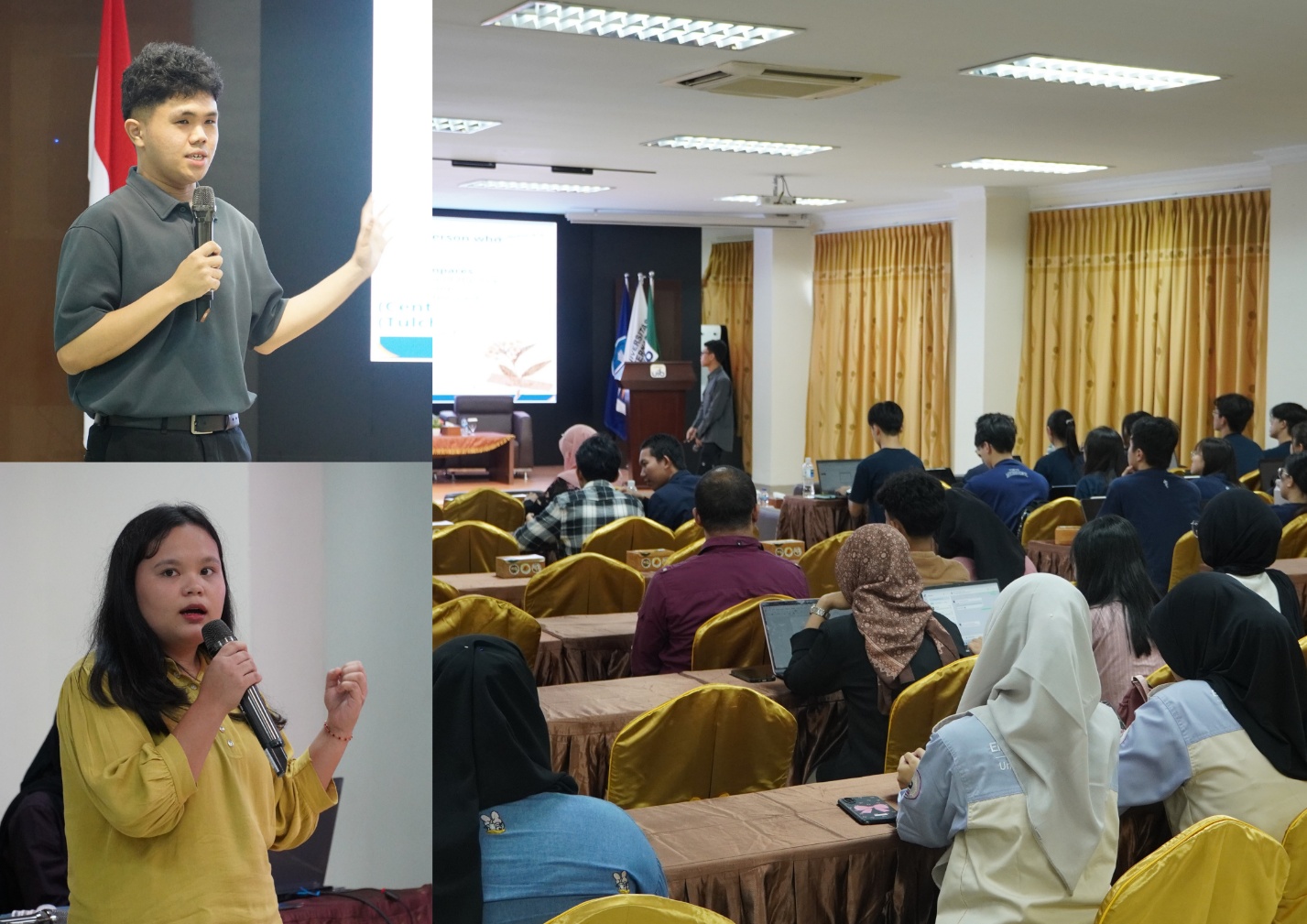
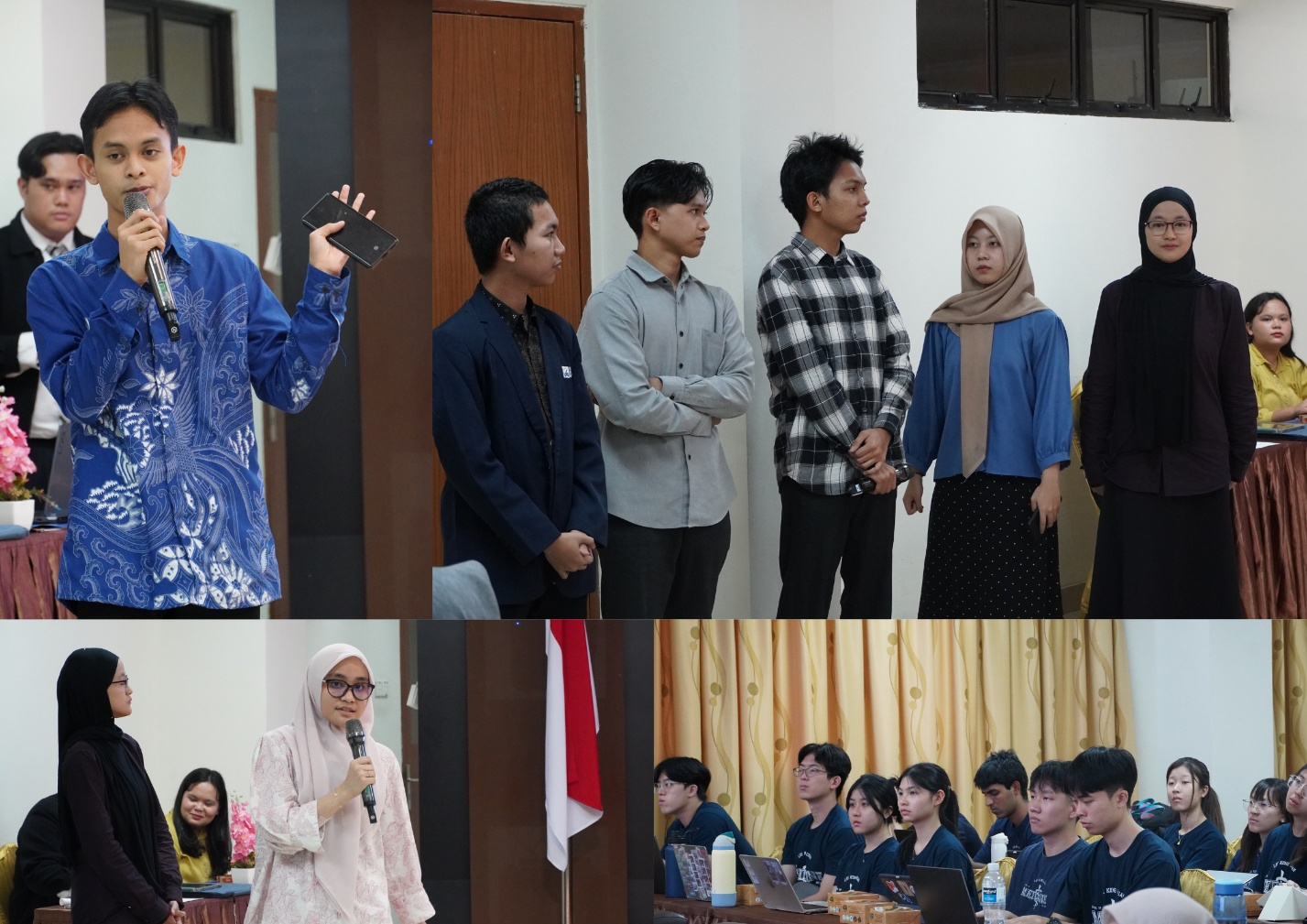
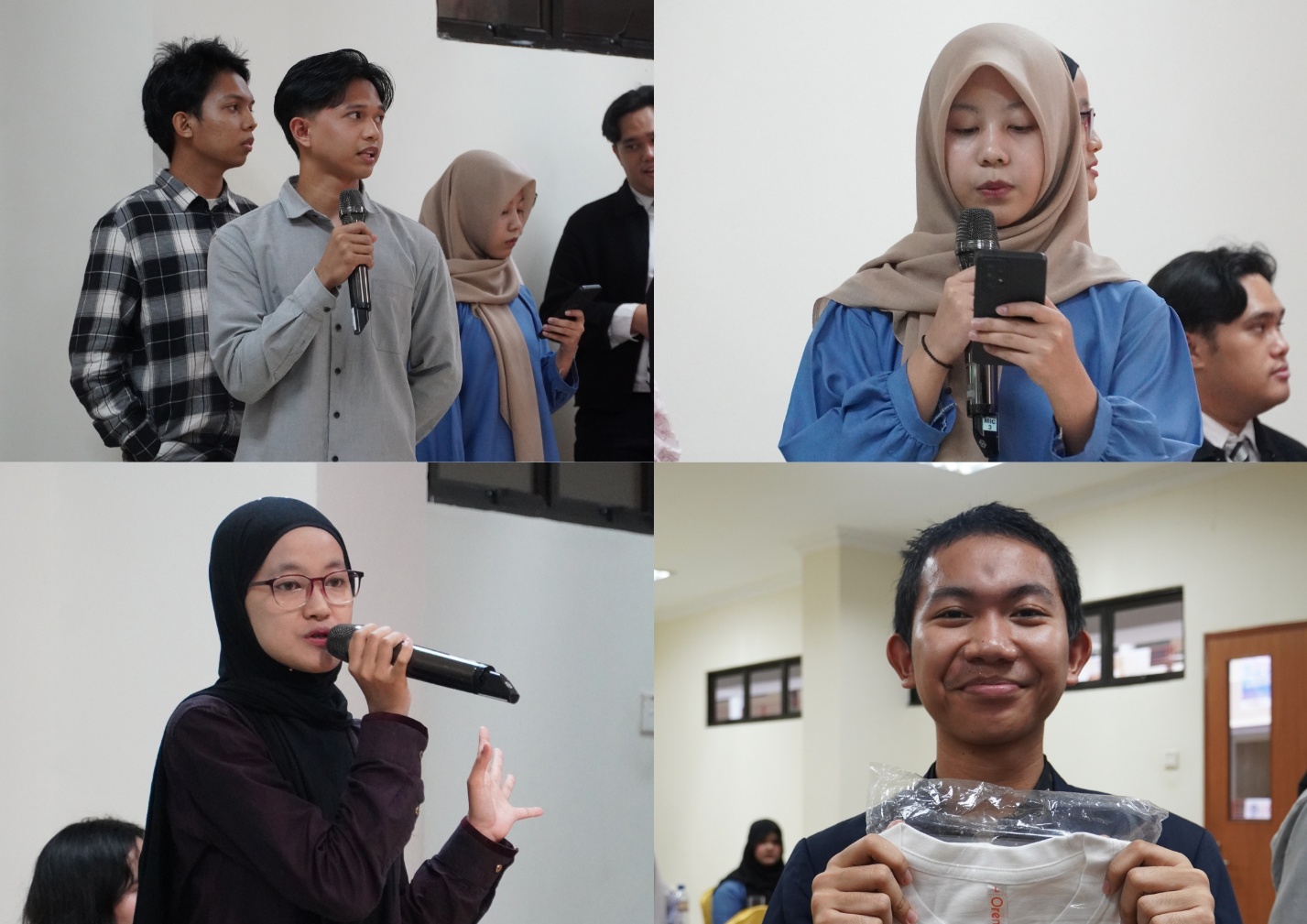
The academic segment of the day opened with remarks from UIB, followed by a guest lecture examining the epidemiological triad as it applies to both communicable and non-communicable diseases, a session that closed with an open question-and-answer discussion between students of both universities. The lecture offered a shared academic reference point for the two groups ahead of their joint fieldwork, allowing students to compare how disease patterns and preventive strategies are approached in the Indonesian and Singaporean contexts before applying similar thinking during the health screening days that followed.
(Source: International Relation Office)
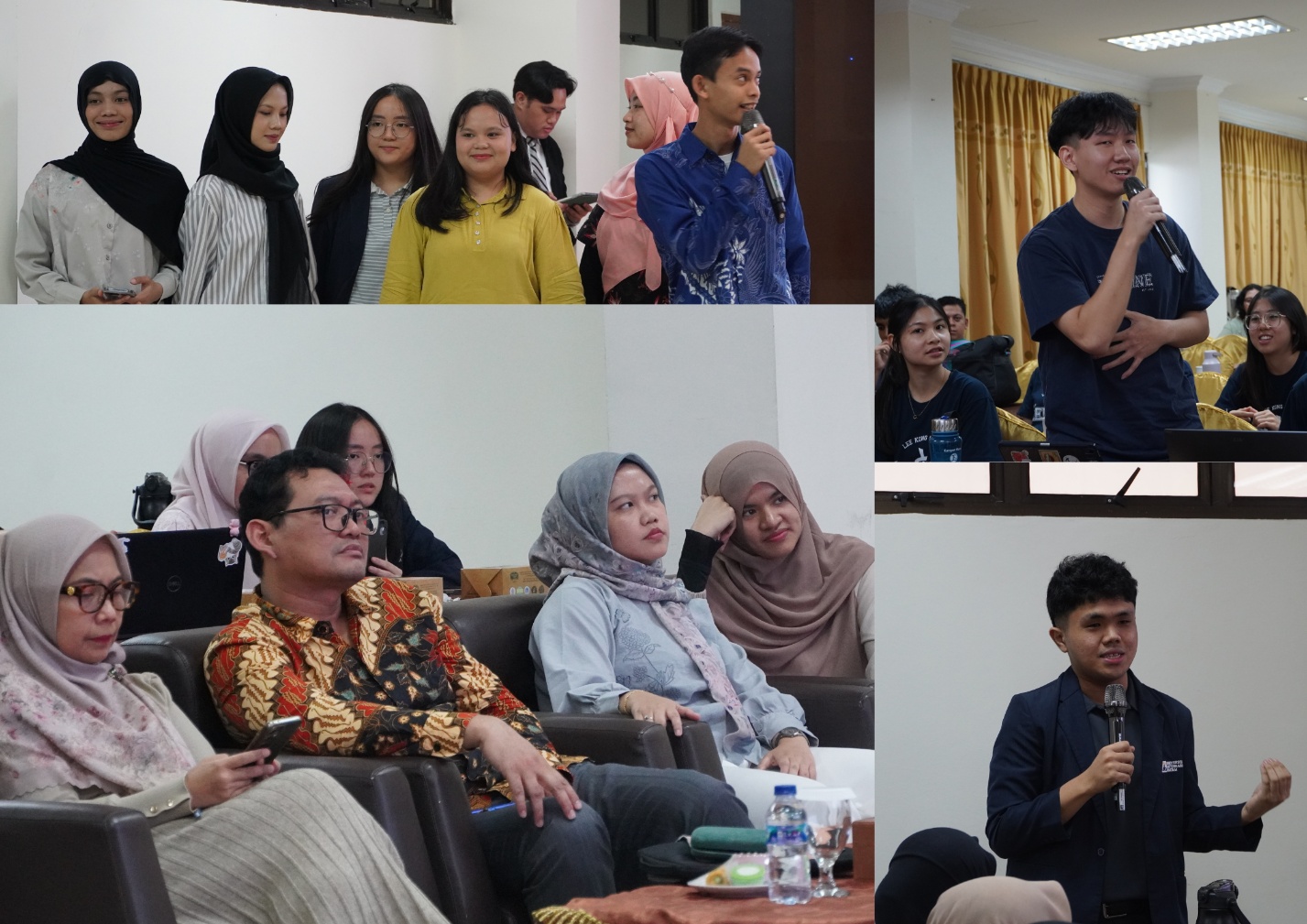
Following the academic session, the two universities exchanged cultural presentations that gave each group insight into the other’s environment. The NTU delegation introduced Singapore’s multicultural society, home to roughly 6.11 million people across a compact 744 square kilometres and shaped by four official languages, before turning to an overview of NTU itself, established in 1991 as a research-focused public university, and LKCMedicine, founded in 2010 in partnership with Imperial College London and known for its team-based learning approach and early clinical exposure across its NTU and Novena campuses. UIB reciprocated with its own cultural sharing segment, giving LKCMedicine’s students and lecturers a window into Indonesian academic life and local traditions.
(Source: International Relation Office)
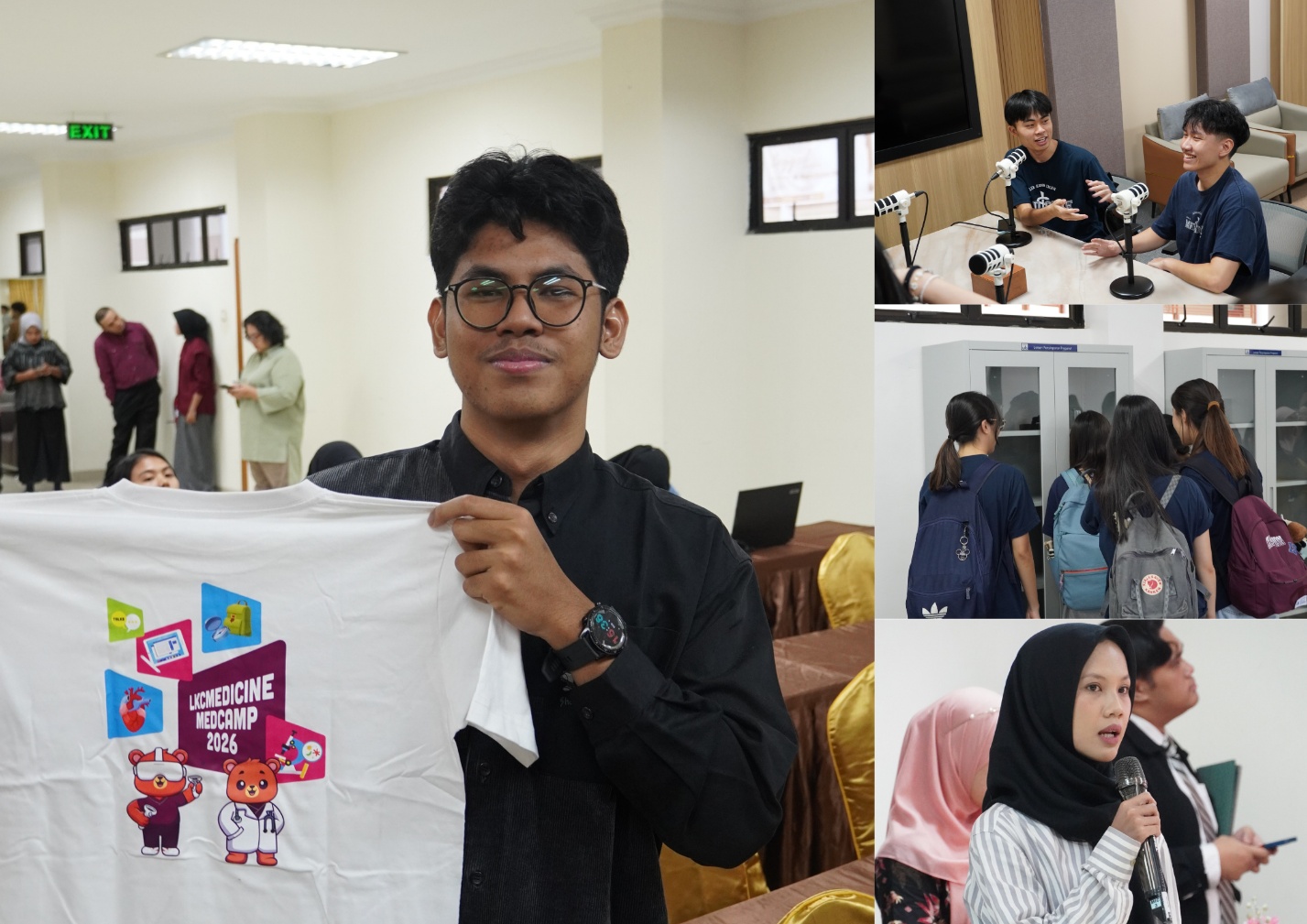
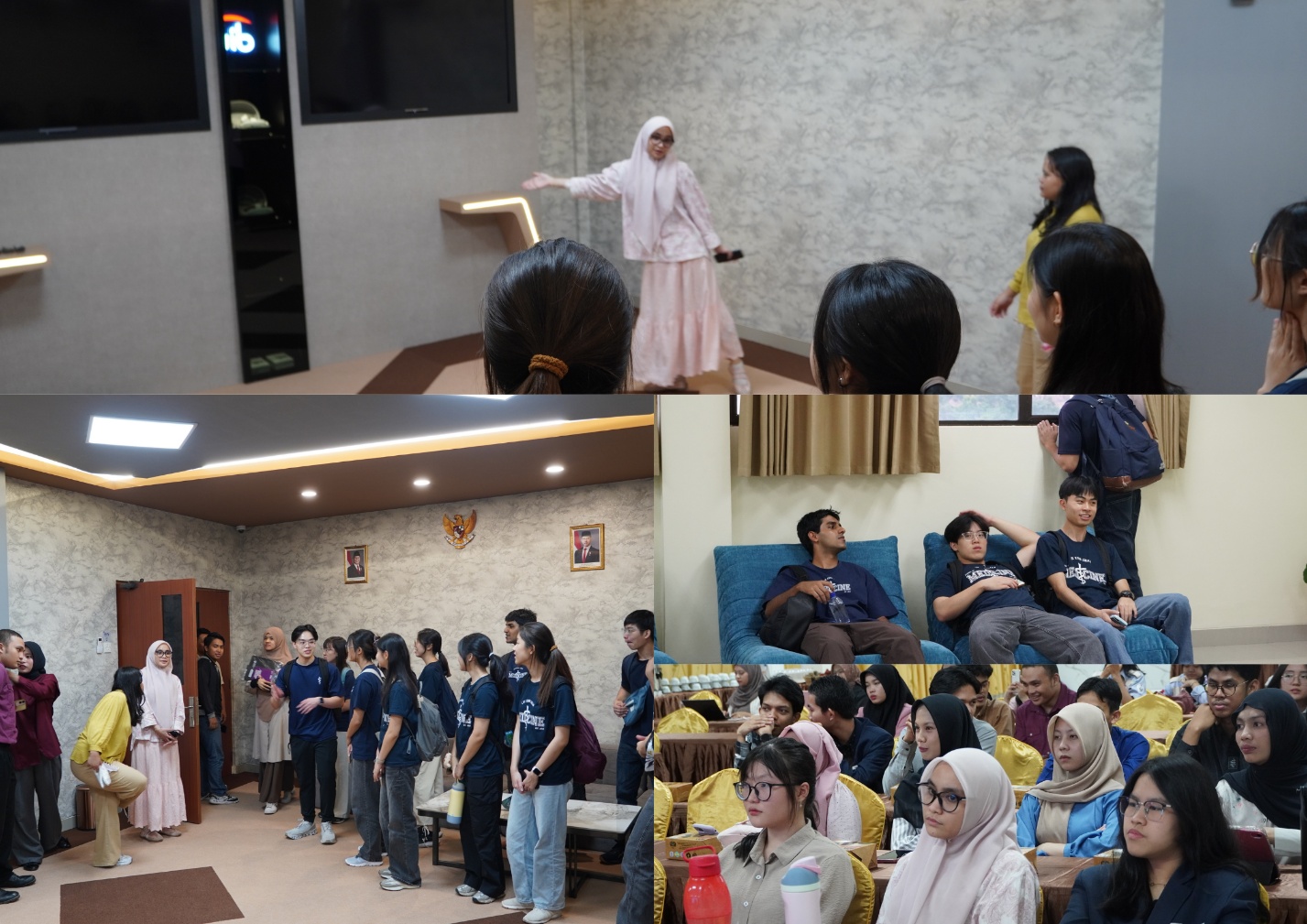
The day closed with a campus tour that took the visiting delegation through UIB’s facilities, offering the NTU students and lecturers a firsthand look at the environment their Indonesian counterparts study in. For many of the visiting students, the tour and the preceding sessions served as a natural bridge to the days ahead, when both groups would work side by side away from the classroom, applying what they had discussed in the health screening activities scheduled for the surrounding villages of Kampung Air and Kampung Punggur.
(Source: International Relation Office)
Beyond the formal programme, the exchange reflected a wider institutional commitment on both sides. The activity was led by Ria Karina, S.E., M.M., Ph.D as project coordinator, supported by Theodesia Lady Pratiwi, S.Pd., M.Hum in preparing the programme’s documentation and communication, and received formal endorsement from UIB’s university leadership. The involvement of senior administrators in approving the collaboration underscored the significance UIB attaches to sustaining international academic partnerships as part of its long-term development plans.
(Source: International Relation Office)
Looking ahead, both institutions expect the July exchange to serve as a foundation for continued cooperation, including future visiting lecturer arrangements, collaborative learning modules, student exchange opportunities, and joint research or community service initiatives. With Project Daya’s students returning to Batam three times each year, UIB and LKCMedicine anticipate that the relationship built through this exchange will deepen further, giving students from both universities recurring opportunities to learn from each other’s healthcare systems while contributing to the communities they serve together.
International Relation Office
Universitas Internasional Batam