Writer: Duke Paopathon Pardede (2461001) | Editor: Gilang Ananda,S.Kom.,M.M
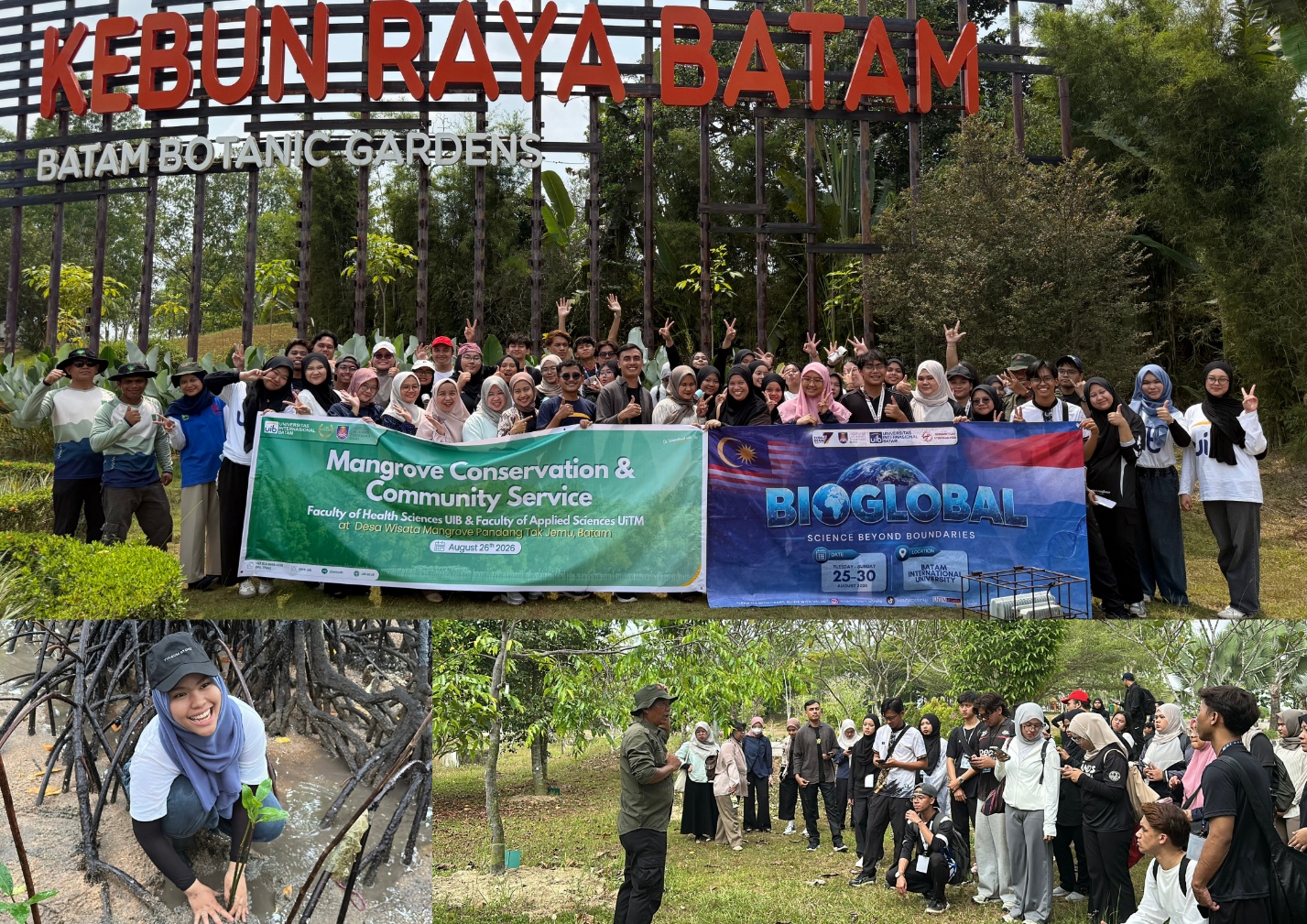
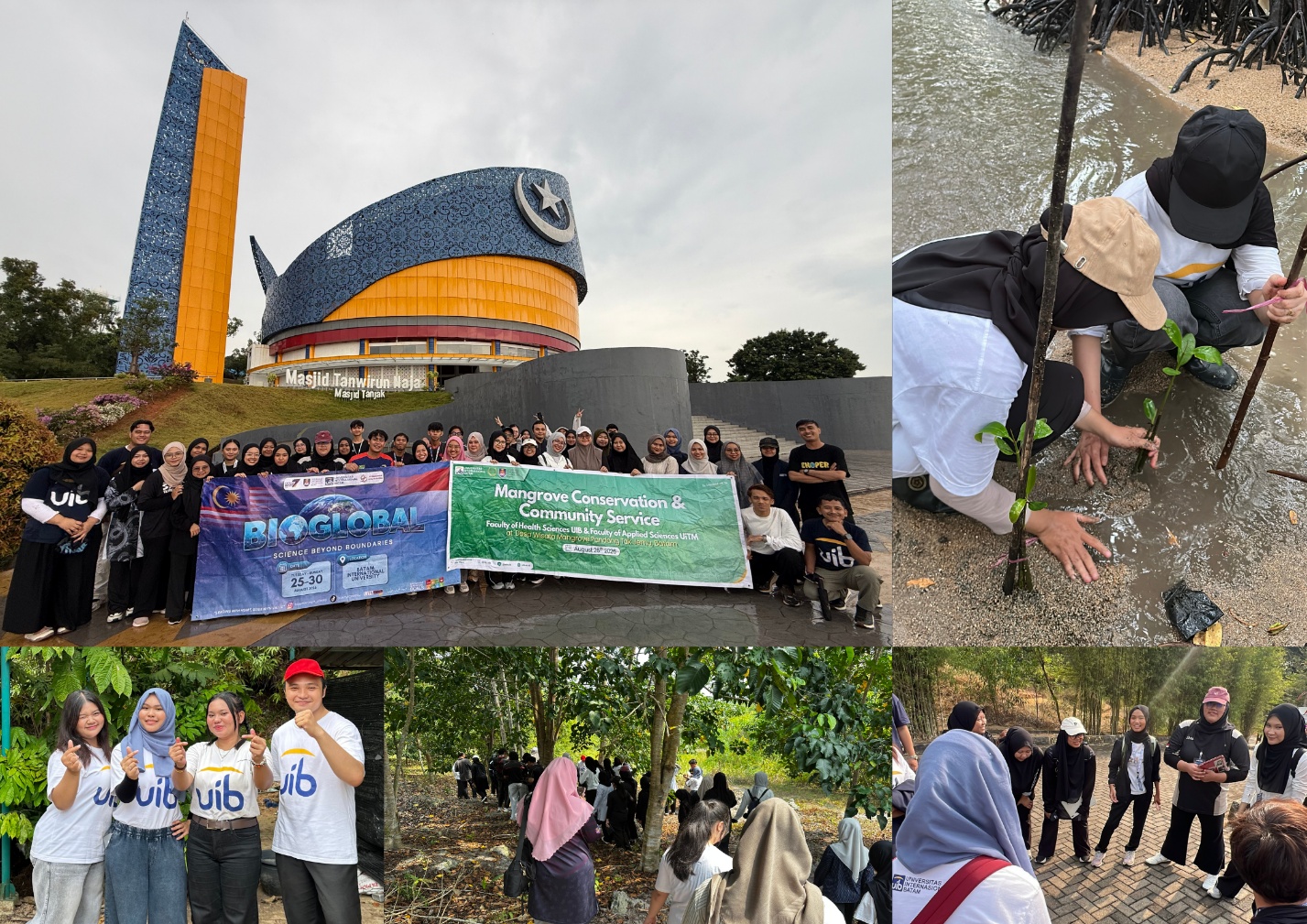
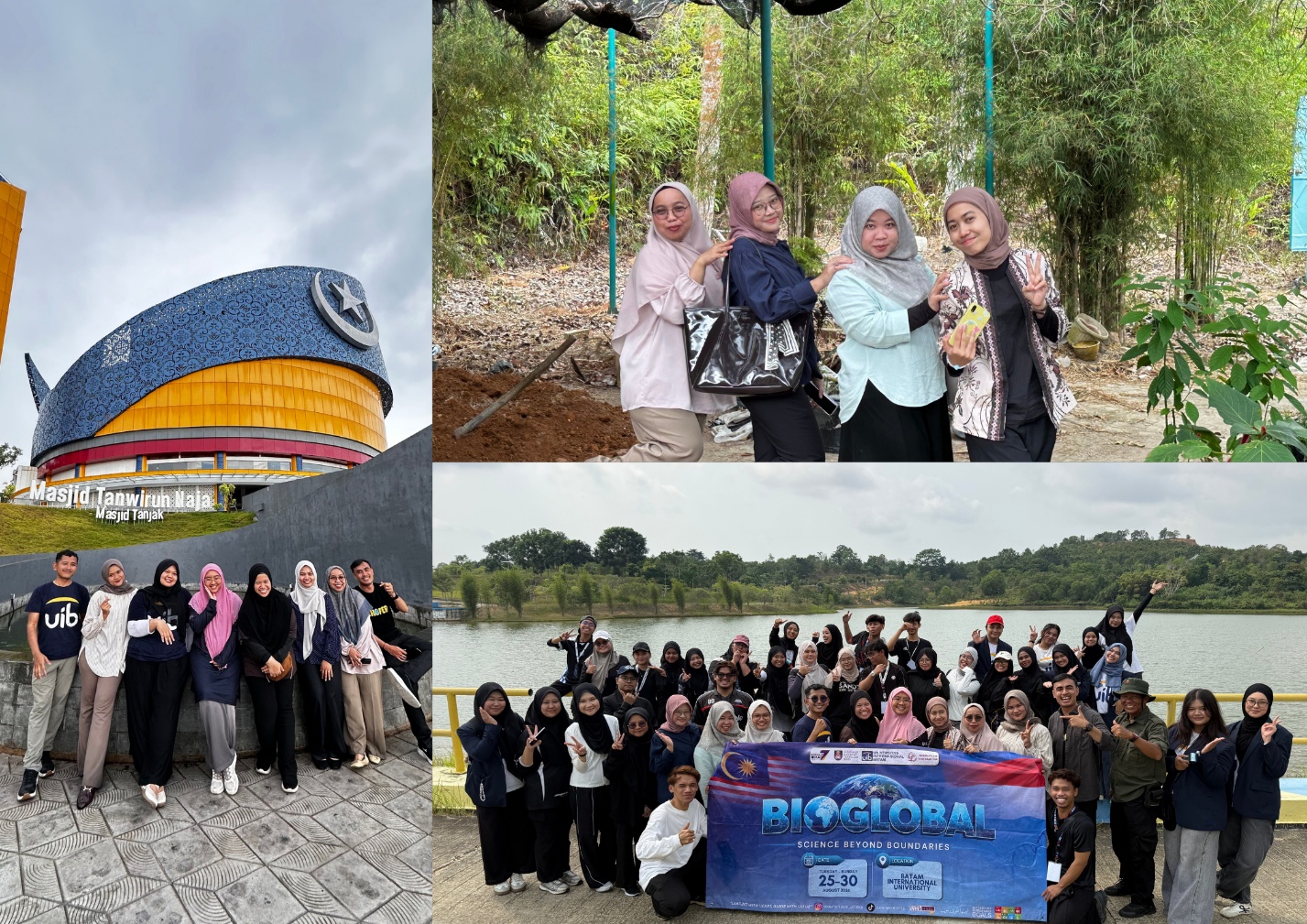
Universitas Internasional Batam (UIB) and Universiti Teknologi MARA (UiTM), Malaysia, strengthened their academic collaboration through an international field-based learning activity on 26 August 2026.
The activity formed part of the “Academic Visit, International Seminar, & Community Service: Collaboration between Faculty of Health & Science UIB & Faculty of Applied Sciences UiTM.” Through this program, students explored Batam’s biodiversity while learning directly about plant conservation and coastal ecosystems.
A total of 26 Biology students from UiTM joined the program. UIB also involved four Biology students and five Nutrition students. Two UiTM lecturers, nine UIB lecturers, and one representative from the International Relations Office (IRO) accompanied the participants.
Exploring Plant Diversity at Batam Botanic Gardens
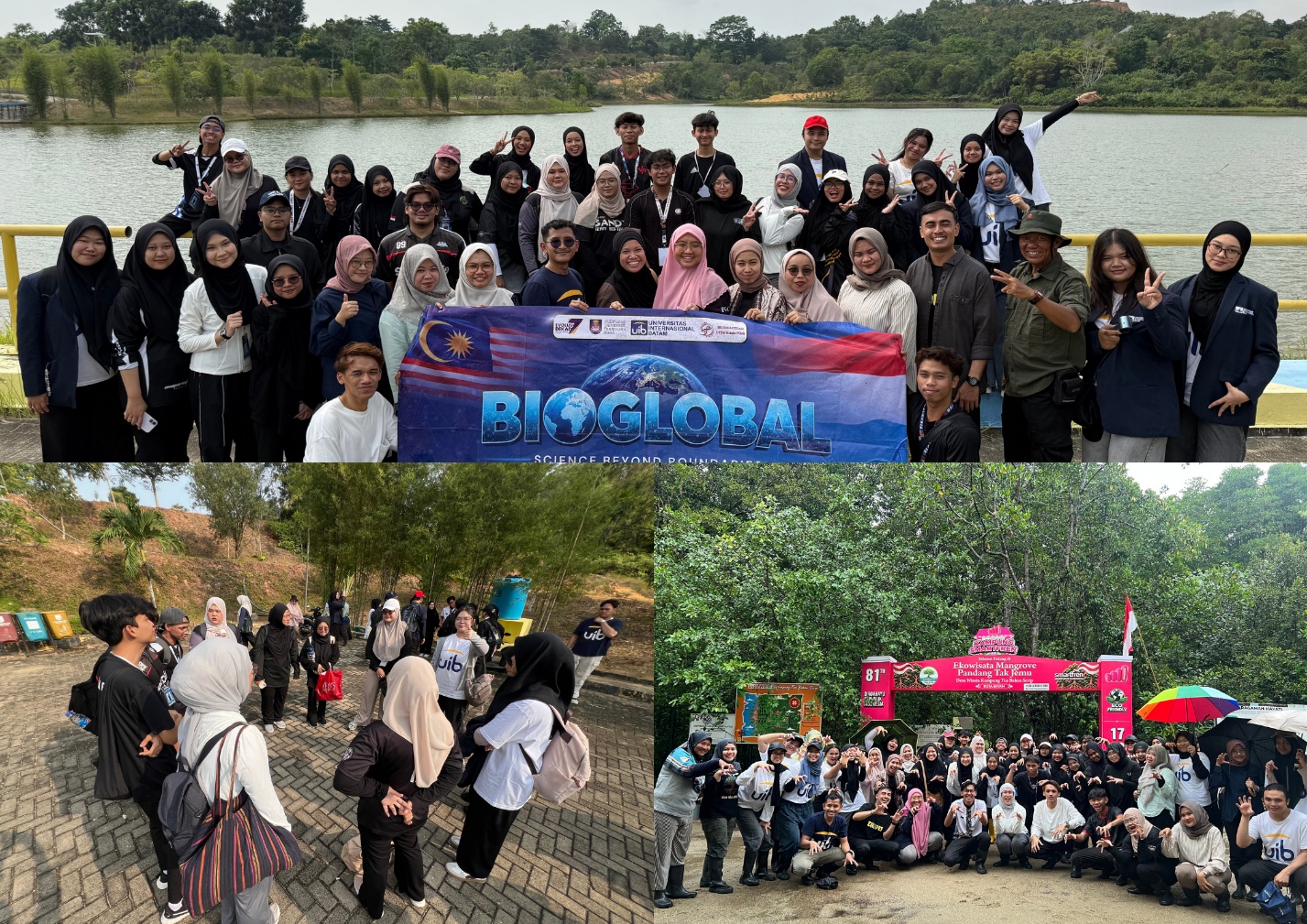
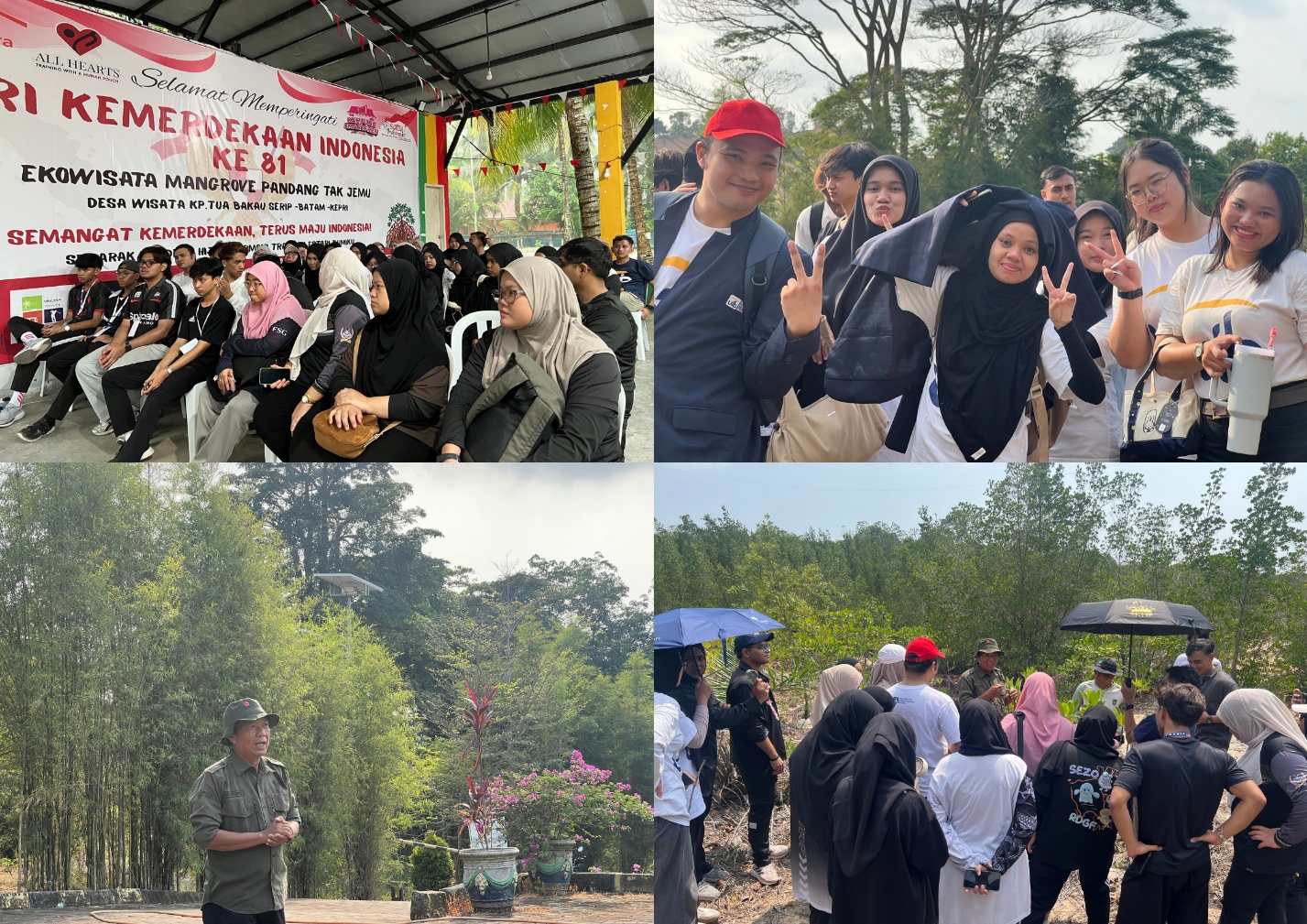
The participants began their activities at Batam Botanic Gardens in the morning. During the visit, students observed various plants directly while receiving explanations from instructors.
The instructors introduced the characteristics, functions, and ecological importance of several plant species. Students also learned how botanical gardens support conservation, education, research, and environmental preservation.
This hands-on learning experience helped students connect theories from the classroom with real environmental conditions.
To encourage international collaboration, organizers divided the students into three mixed groups: Ixora, Avicennia, and Nephentes. Each group consisted of students from UIB and UiTM.
Through these groups, students exchanged ideas and communicated with peers from different academic and cultural backgrounds. They also collected information that they later developed into presentation materials.
Learning About Unique Plant Species
During their exploration, students observed several plant species, including Nepenthes, Aquilaria, Hopea odorata, Vatica granulata, and Dipterocarpus.
The instructors explained the characteristics, ecological functions, and conservation value of each plant. These discussions encouraged students to understand biodiversity more closely and recognize the importance of protecting natural ecosystems.
One of the main topics was Nepenthes, commonly known as the pitcher plant. Students examined its distinctive pitcher-shaped structure and learned how the plant captures insects to obtain additional nutrients.
The activity also showed students how plants can develop unique adaptations to survive in environments with limited soil nutrients.
After completing their observations, each group organized the information they had collected. They then transformed the findings into academic presentations. This process strengthened their analytical, communication, and teamwork skills.
International Collaboration Beyond the Classroom
For UIB students, the program offered an opportunity to learn alongside UiTM students outside a traditional classroom setting.
Outdoor exploration and collaborative assignments created a more interactive learning environment. Students could exchange perspectives while exploring Batam’s biodiversity together.
One UIB Nutrition student, Tita, described the activity as “really fun.” She considered the field visit one of the most enjoyable activities she had experienced while participating in a program together with lecturers.
Her experience reflected the engaging atmosphere created by outdoor learning, teamwork, and international interaction.
Discovering Batam’s Mangrove Ecosystem
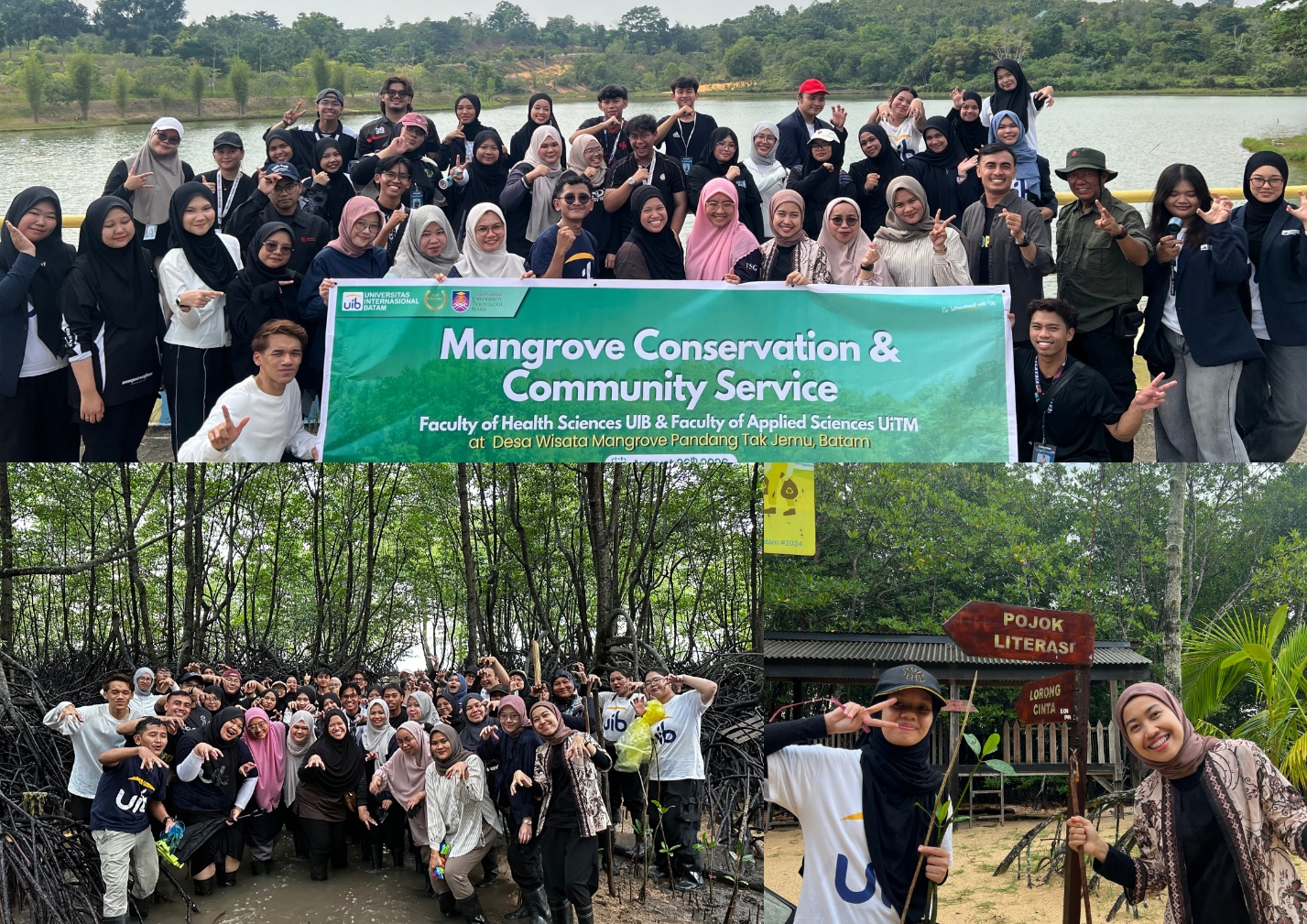
In the afternoon, the participants continued their journey at Mangrove Ecotourism Pandang Tak Jemu.
Students learned about the characteristics and ecological importance of mangrove ecosystems. The session highlighted how mangroves protect coastal areas, provide habitats, and support environmental sustainability.
Participants studied several mangrove species, including Bruguiera gymnorrhiza, Rhizophora stylosa, Rhizophora apiculata, Sonneratia alba, Avicennia marina, Lumnitzera racemosa, and Rhizophora mucronata.
They also explored the morphological adaptations that allow mangroves to survive in challenging coastal environments.
Another topic focused on vivipary, a reproductive adaptation in which seeds begin to germinate while they remain attached to the parent plant. Through this explanation, students gained a better understanding of how mangroves reproduce and establish themselves in coastal habitats.
Taking Action Through Mangrove Planting
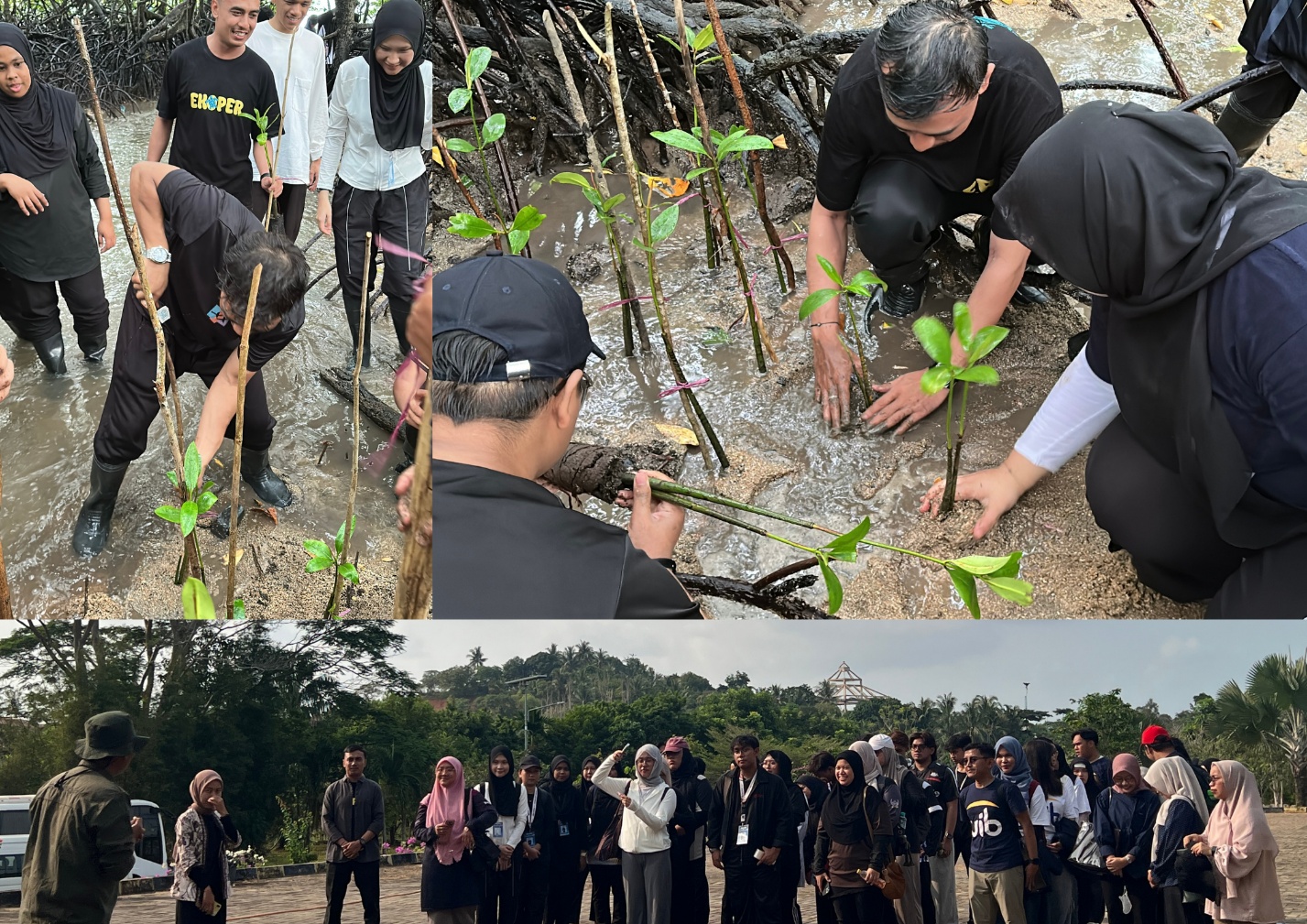
The program did not stop at observation and discussion. Students also joined a hands-on mangrove planting activity.
Participants planted mangrove seedlings in a designated area and directly contributed to environmental conservation efforts. The activity gave students practical experience while reinforcing the importance of protecting coastal ecosystems.
Through this activity, students learned that environmental conservation requires knowledge, collaboration, and collective action.
Strengthening International Learning at UIB
The field-based learning program successfully combined academic exploration, environmental awareness, and intercultural collaboration.
Visits to Batam Botanic Gardens and Mangrove Ecotourism Pandang Tak Jemu allowed participants to examine biodiversity from terrestrial and coastal perspectives. At the same time, the activities strengthened communication and teamwork between students from Indonesia and Malaysia.
Through this collaboration, UIB and UiTM demonstrated their commitment to creating meaningful international learning experiences. Students could observe, discuss, analyze, and apply their knowledge to real environmental issues.
The program also strengthened academic and interpersonal connections between the two universities while supporting internationalization and collaborative learning in higher education.
Want to experience an internationally connected learning environment and gain meaningful academic experiences beyond the classroom? Join Universitas Internasional Batam and become part of a global learning community. Register now at pendaftaran.uib.ac.id.
International Relation Office
Universitas Internasional Batam